Resources
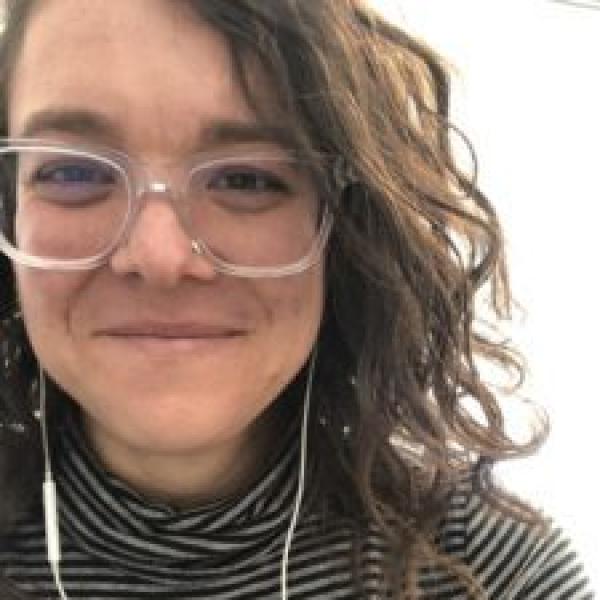
I finally went to my primary care doctor the other day and proceeded to unload about three years’ worth of pent-up ailments upon her. I'm losing my hearing! Do I have early-onset dementia? My right knee hurts! Can you test my thyroid? I think I have diabetes! What is this weird bump? My pinky is numb! Is my heart rate normal? Am I a hypochondriac?! This poor woman.I’m pretty sure she diagnosed me with a very serious condition called… “aging.”I’m turning forty this year and suddenly, it seems, I find myself routinely waking up at four a.m., taking a handful of vitamins with breakfast, and grumbling about “kids these days.” The skin on the back of my hands has turned to crepe paper. The other weekend I didn’t go watch a friend’s band play because the show started WAY too late. Readers, it started at nine p.m. I fear it can no longer be denied: I’m getting older.It’s not that I don’t spend time thinking about bodies, including my own. I’ve read books such as Minding Bodies: How Physical Space, Sensation, and Movement Affect Learning (Hrach, 2021). I teach courses on disability and race—two classes in which the body comes up a lot. I emphasize to students that religion isn’t just about beliefs; it’s enacted and embodied amidst a material world too. I know I need a snack in the middle of my Mon/Wed 9:35-10:50 a.m. class or my stomach will let out a series of plaintive whale songs. I’ve dealt with decades-long injuries. I’ve suffered from long COVID. People I love have died. But, oddly, I haven’t thought all that much about aging, or its relationship to my work, until more recently.Part of this odd oversight may be that aging is pretty embarrassing sometimes. Kids can literally fall out of a tree, get up, and walk away just fine; I can pull my back, and need to take it easy for a week, because I reached too far trying to plug in a lamp. This isn’t exactly the kind of story I want to broadcast at the monthly department meeting. Part of it may be that it’s hard to admit, perhaps even to fathom, just how much our lives are affected by this “meat suit” (as my yoga teacher calls it) that is only ours temporarily. Part of it may be that professors tend to work late into life—and so aging doesn’t seem all that relevant to my professional world. Part of it may also be that, because faculty are constantly encountering a turnstile of younger people in our classes, it may be easy to forget we ourselves aren’t forever young. I still feel only a few years older than my students (especially whenever I can sense the presence of free pizza nearby). Part of it too may be that we fancy ourselves living “the life of the mind”—even if it’s a big lie or hell, for a lot of us—and the mind can seem ageless (though the other day I stood in front of my bathroom sink and couldn’t remember which handle was for hot, so….). Part of it is denial, I’m sure.Aging brings up a bunch of considerations—and not just about the indignities and rebellions of a body I can no longer (could not ever?) control. How do I continue to do this work well when my mind is no longer as sharp as it once was? (And what does “well” even mean? Perhaps such notions change over time….) What do I have to offer to my colleagues and students, now that I am no longer fresh out of school? How do I make my own meaning, when the milestones and achievements of the earlier years (e.g., get a degree, get a job) have passed? How can I stay relevant in a rapidly changing world, around those same youths I mentioned above? How can I remember where I put my glasses?!? What are my new goals, what am I aiming toward, where is the forward momentum coming from now? How do I tap into the wisdom of mentors and others who have been through this time and these transitions before me? How do I learn to live with the losses, both personal and professional, that accumulate? How do I stay excited about doing the same thing, for semesters on end? Are there really ways to beat or stave off mid-career malaise or the midlife blues? How do I do *gestures around* all of this for another several decades? These are tough questions to contemplate and I don’t have the answers yet. I’m not sure I ever will.Some of you are probably chuckling to yourselves. What I wouldn’t give to be 40 again, you might be thinking. Yet difficult wonderings can come for us at any age or stage in our career. I’m remembering a quotation my mom, who has since passed away, sent to me once: “Sometimes when you’re in a dark place, you think you have been buried. But you’ve actually been planted.” Now, maybe, is a time to grow.
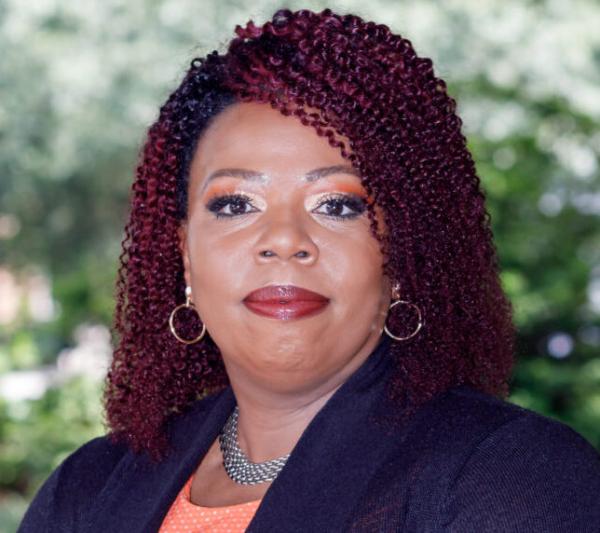
I remember dial-up modems and the exhilaration of logging onto AOL.com as a teenager. A few years later, I experienced the novelty of Facebook. Duke Divinity School (DDS) advised all of its masters’ students in the 2008 incoming cohort to create Facebook accounts so we could stay connected and support one another through the first year of our graduate program. DDS recognized that this would be a time where students begin to deconstruct presupposed understandings of religion, Bible, and the theologies that we had received from our families of origin and church contexts. Reflecting back on that time, I feel as if the beginning of my deconstruction was wed to the rising age of social media. Now as a professor of the New Testament in the age of social media, what should some of my best practices entail? While difficult to define, the term “social media” identifies the various internet applications that allow users to construct their profiles while also creating content that connects and networks various groups of people. While social media is supposed to be about “connection,” I imagine that we all have experienced “internet trolls,” folks who try to bait and upset readers with disturbing comments. As professors of religion and theology, I would argue that we are the prime targets for internet trolls just by virtue of the nature of our work at a time where there seems to be rising White Christian nationalism in the United States. So, I often ask myself questions about the role of the professor in the age of social media. For example, in my context, our Director of Outreach and Alumni Relations requests that faculty increase their social media presence as a way to connect with alumni who are out working in the world. Can I carefully curate my social media presence to let those alumni know that I support them from afar? As a professor, what content can I create that allows alumni to be refreshed as they do the difficult work of leading congregations and parachurch ministries? Moreover, can social media serve as a way for faculty to connect with prospective students as we all experience the feelings of scarcity in theological education? Is this another area of “service” that faculty can add to their tenure portfolios (assuming one has a job with tenure!)? While I am not sure of the proper answers to the above questions, I certainly try to be cognizant of what the next generations of theological students may look like. Gen Z, for example, born between 1997 to 2012, is the first generation to have grown up with ALL THE TECHNOLOGY. Further, they will buy products from social media sites more than any other generation. Is there a way for Millennial, Gen X, and Boomer faculty to capitalize on connecting with Gen Z through social media? I think that is a conversation that must be had in our various theological faculties. I started @BoozyBibleScholar on TikTok and Instagram, providing segments called “One Minute Womanism” and “Scripture Through Womanist Eyes” as a way to show my growing community that there are other voices besides the conservative right-leaning interpreters of scripture. Now, I will definitely not be keeping up with the latest TikTok dance trends, but I will add my own particular voice to the ever-growing vacuum of social media to provide a brave space for the folks who may be feeling left behind and kicked out of Christianity. Just as in the opening of this reflection I recognized my own deconstruction during the rise of the social media age, I imagine that Gen Z experiences similar deconstruction(s). As I peruse social media, it seems to me that the loudest voices in Christianity today tend to be destructive voices. If you have pondered a desire to help silence those destructive voices, I implore you to act now. Find ways to make your scholarship available to the public. I wholeheartedly believe that one of the professor’s jobs in the age of social media is to be a transformative voice in contrast to those who will try to tear people down. Instead of letting John Piper, John MacArthur, or Voddie Bauchaum be the loudest voices in public religious discourse, professors of religion and theology owe the American public counter voices in the age of social media. My hope is that my social media presence will at least point some to believe that there are other ways to be “Christian” in a world that has vastly devalued such an identity. TikTok: @BoozyBibleScholar and Instagram: @BoozyBibleScholar
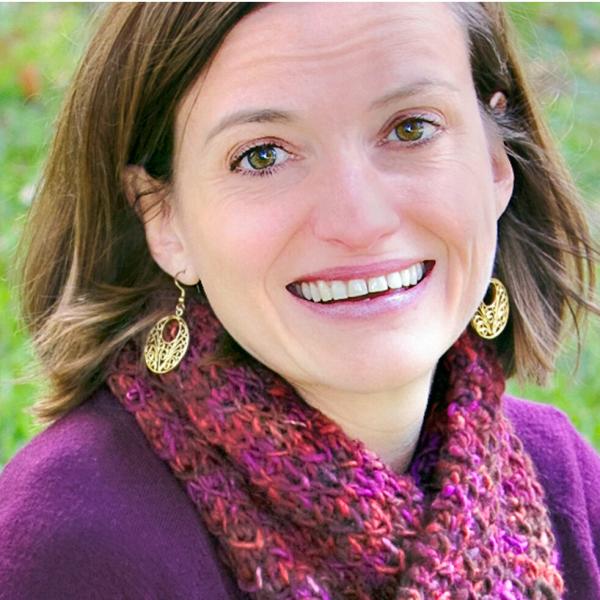
Twelve weeks ago, there was a class, who took on an enormous task, of studying the present and the past, Israel and Palestine. Dr. Breed taught them the history, so that it wouldn’t be a mystery, when they set out on their journey, to explore a land where two people are entwined. All was going great, as the students began to articulate the past, present and current state, of historical sites and holy places, Then October 7th came, the bombing by Hamas was to blame, all our plans had to change, no longer could we enter these sacred spaces. . . So began a reflection by Columbia Theological Seminary student A’Keti Mayweather, at the end of a January 2024 trip that was originally planned as a travel seminar in Israel and Palestine. My colleague Brennan Breed and I were scheduled to take a group of students to that land for two weeks, and he was teaching a fall class in preparation for the trip. Everything changed on October 7. As A’Keti put it, Drs. Breed and Moore-Keish developed a plan, to help us learn from our fellow man, in two of our nation’s greatest domestic lands, New York and Washington D.C. . . . We were concerned about how to do this well; after all, protests were roiling university campuses, colleagues and administrators were being publicly criticized for what they said and did not say about the conflict, and people were being threatened and losing their jobs. All this while real human beings are fighting and dying in Gaza, Israel, and the West Bank. Quickly, we put together a trip that enabled us to meet with Jewish, Christian, and Muslim communities in these two U.S. cities, to seek understanding of Israeli and Palestinian peoples amid the unfolding conflict. With help from colleagues at the American Jewish Committee, the United Nations, the Presbyterian Church (USA) Office of Public Witness, and others, we attended worship services in synagogues and masjids, shared meals with rabbis and pastors, talked with imams, activists, and aid workers, scholars and students, United Nations representatives and staff at the U.S. Holocaust Museum. As our student Jordan put it, As we visited more places, it became clear that many of the stories I had heard were true about Palestinian and Jewish suffering. Talking to [our Jewish and Palestinian partners] it was clear that many people were hurt and afraid. That there was much destruction. As we went on, we heard more and more of these stories and each time it seemed as though it got worse as the casualties grew, more disagreement presented itself, hope seemed to dwindle, and the status quo seemed to prevail. The challenges in this class were real: suddenly planning a new trip on short notice; addressing our shared disappointment at the change; seeking engagement with multiple communities who were themselves in the midst of trauma; trying to cultivate compassion without becoming overwhelmed by the complexity and scale of the suffering. How and what did we learn? How did we seek new understanding amid cognitive dissonance, hearing multiple stories of existential threat to both Jewish and Palestinian peoplehood? How did we keep from losing ourselves in cynicism and despair? Through many encounters, we learned that we could not reduce any side of this conflict to a caricature. Palestinian Christians and Muslims, Israeli Jews, U.S. Muslims, U.S. Jews—all are real, vulnerable human beings with stories we needed to hear. And each person we spoke with was longing for justice and for peace. As another student, Susan, said, Every day on our journey, our heads would be swimming and our hearts broken wide open as we heard more and more perspectives, all powerful, all convincing, all urgent. Every person that we heard from needed us to see their perspective and their story. Every person that took the time to sit with us, share food with us, open their homes to us, open their houses of worship to us, was seeking us out. Every person that we met—Palestinian, Jewish, Muslim, Christian, and so much more—felt strongly about their vision of justice. And yet despite the differences, one thing was clearly pulsing through each conversation and that was this palpable sense of urgency and belief in peace across any lines you might imagine. Even with their clashing perspectives on the conflict, we did not meet any demons—only humans longing to be seen and heard. And so we practiced seeing and hearing stories, again and again and again. Worshiping with a variety of religious communities also helped us to learn about Israeli and Palestinian people, through embodied singing and praying, sitting and standing, and through being guests in the sacred space of another community. Our student Tony reported: It was my first time attending Shabbat Services. It was also my first time attending Muslim Jumu’ah Services. Both were enthralling, but for very different reasons. With my Jewish siblings, I was so captivated by experiencing the foundation of my Christian faith. I enjoyed the prayers and songs in the Shabbat services, but what mesmerized me the most was the opening of the “ark” that housed the Torah. . . . Seeing the magnificent image of the ark, and the care and reverence with which they handled the scroll, was absolutely beautiful. Also, seeing the congregants proactively move to touch the Torah with the prayer books, and then kiss the prayer books, was a vivid reminder of how holy and sacred God’s word is. One delightful interfaith twist occurred when we were welcomed as guests to Jumu’ah prayers at Masjid Muhammad in Washington DC. That community currently worships in the basement of Holy Redeemer Catholic church, while their own historic mosque is undergoing renovation. As a result, when we thanked the community leaders for their hospitality in welcoming us, they responded by seeing us as part of the host community, since we were also Christian. We were part of the wider Christian family that was making them welcome while they were temporarily displaced from their own home. As our own self-understanding pivoted from guest to host and back again, we recognized once more that the best kind of learning takes place through building relationships across lines of difference, undoing harmful assumptions, and recognizing our mutual human vulnerabilities. “This wasn’t the trip that any of us planned for and yet I believe that it was exactly the trip we were supposed to take.” So concluded Susan in her reflections. And another student, Andrew, reflecting on the challenges of learning about Israel and Palestine in this time said: “When we experience seemingly impossible tasks, we should take small, but measurable steps, to promote change. Education is our tool for making a real and sustainable difference in the Israeli-Palestinian conflict—by transforming one heart at a time, one person at a time.”
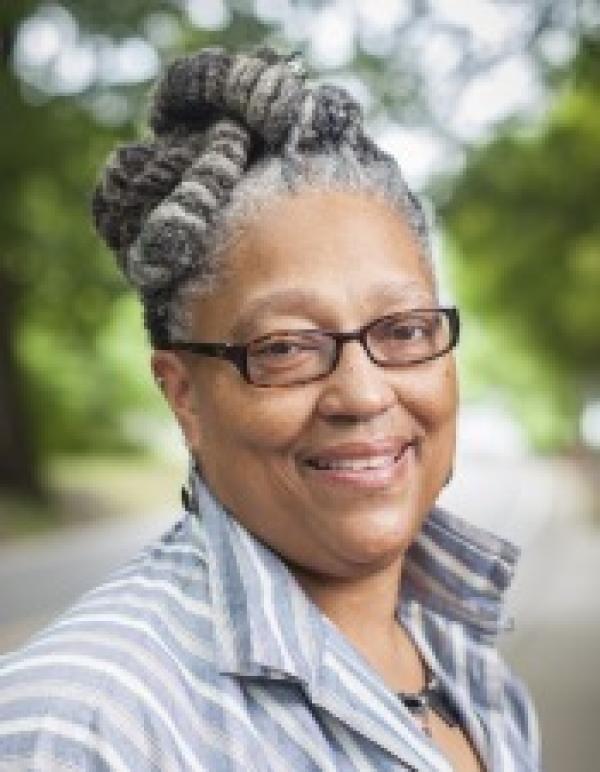
The following is adapted from a talk given by Dr. Townes during the 2024 Wabash Center’s BIPOC Faculty Luncheon at the annual conference of the American Academy of Religion (AAR) and the Society of Biblical Literature (SBL). Self-care is within the matrix of our total health; how we care for ourselves—mind, body, soul, and spirit. Self-care is often the last thing for which the academic life makes allowances. We must decide that we will craft the habits of mind, heart, soul, and body. There is no one way to go about self-care, as we each have our own biorhythms and social contexts. But I believe there are things that we can all hold onto in the necessary work of taking care of ourselves; things that will also help us in bringing people whole in the classroom; things that serve our scholarship, our institutions, our families, and our kin. In thinking these things through, I have found myself revisiting a passage of sacred text that is apocryphal for me. Some may have heard me reflect on this before. This passage has the same kind of holy-fying (wholly-fying) impact on me. It is found in the film, Daughters of the Dust by the African American filmmaker Julie Dash, which tells the story of a Gullah family preparing to come to the mainland at the turn of the twentieth century. Tradition, change, migration, and bondedness to the land, are woven together in the story’s Peazant family. The memories of slavery and working in the indigo plantations of the island are the stuff of history books, written in the hands of the older members of the island and in the stories, they tell to the younger ones, the games the young and old still play, and in the African and Arabic words they continue to teach the children. The passage that I revisit are lines spoken by the character, Eula, who had been raped by a white man. The narrator of the movie, the Unborn Child, is Eula’s child. Only the audience knows that the child she carries is truly the one she conceived, in love, with her husband Eli. Eula calls the women to task for ostracizing Yellow Mary, a prostitute, who turned to this life after her own experience of rape. Yellow Mary had come home to the island to be with her family again and to heal. Eula reminds them all that the fate and hope of Yellow Mary is their own—no one escapes the ravages of evil, no on stands outside of the promise. Eula turns to the younger women and her words are for us as well. ‘There's going to be all kinds of roads to take in life.... Let's not be afraid to take them. We deserve them, because we're all good women. Do you... Do you understand who we are, and what we have become? We're the daughters of those old dusty things Nana carries in her tin can... We carry too many scars from the past. Our past owns us. We wear our scars like armor, for protection. Our mother's scars, our sister's scars, our daughter's scars... Thick, hard, ugly scars that no one can pass through to ever hurt us again. Let's live our lives without living in the fold of old wounds.’ It is within this constellation of possibilities that I want talk about self-care with you. The notion of all kinds of roads, and our willingness to take them. The fact that we are, most of us, good women (and men). We are the daughters and sons of those dusty things that Nana carries in her tin can—there are scars: glass ceilings and other discriminations based on gender, sexual orientation, weight, beauty, race, age, religiosity, culture. And yes, we do wear some of those scars. For some of us they are like armor because we have discovered that we do need protection. But what does this do to us, ultimately, when we live our lives in the folds of old wounds? When we cannot see another way to be? These are the kinds of questions that come to mind when I am asked to talk about self-care. These are the kinds of questions that ask each of us to think through what it means to be responsible, to take responsibility for creating our health each and every day, to realize that taking care of ourselves is radical witness to God’s ongoing revelation—not only in history, but in the immediacy of our breathing. Indeed, God's presence is the very fabric of our existence, immanent and transcendent, and I think we must stay mindful that a key element of self-care is living our lives with integrity and faithfulness in God. This means coming to a sense of self, finding our identity, treasuring the gift of our lives. For me, self-care is an important component of health and healing in order to create whole and holy selves. So, we must take care that we do not spin our lives, our careers, our ministries around a success ethic that is grounded in measurable gains and regrettable losses. To practice care for ourselves, means recognizing that we can't run off with someone else's scholarship or appointment. Because even when we steal, that doesn't make it ours, it only makes it stolen. Self-care is about stretching into your deepest self to discover anew what restoration and healing can and must mean for you when it is grounded in grace rather than solely on the latest U.S. News and World Report model of success. I urge all of us to proclaim the blessedness, the sacredness of our lives. This can be a challenge. It is easy to lose sight of this in the midst of phones that ring without ceasing, calls that are never returned, e-mail after e-mail, and the oh-so omnipresent Zoom. But, if we think about the call to proclaim the blessedness, the sacredness, of our lives as a strength rather than as a virtue, we can draw comfort and sustenance. As a womanist, I believe that self-care must be embodied, personally and communally, as it brings together the historic force of our spiritual lives with the demand of the spirit to love our faith through our health and through taking care of ourselves as best we can. Self-care is not an abstract, sterile, utopian category. Health and redemption are tools to build bridges that actually go somewhere and give us redeeming time of sustenance building, so that we can continue to make bricks with no straw, if we must. We must, begin with the wounds, those scars, in Eula’s words, those of our mothers, daughters and sisters, thick and hard. We must start caring for those scars, the folds of those old wounds that have, in some cases maimed us with lies, secrets, and silences. These wounds that mark us, do not need to define us. For as wise folk, as people seeking wisdom, we must grasp a hermeneutic of suspicion. That is, we must examine our first works over and over again. Self-care comes in a variety of sounds and textures and I suggest that we need new visions of excellence and adequacy. Because holy boldness does not mean that we work ourselves to death right up to the pearly gates. We are not to provide racialized and gendered cannon fodder for a bureaucracy that likes to declare its holiness, or relevance, or scholarliness while colleagues engage in mind-numbing studious lint-picking from their sanctified navels; while some white male academics rail on about how white men can’t find jobs or a decent match to their self-anointed gifts and then look at all of us as if we should dignify such inane chatter; while issues of class go unaddressed every day and in every way; while “DEI” has suddenly become a four-letter word, while that very same diversity is helping to keep many of our institutions afloat financially. Or, at least give us enough buckets to keep bailing water until the capital campaign begins to reap benefits. No, self-care means declaring that part of who we are is about seeking liberation of soul and body and intellect and spirit. It means that we must challenge ourselves to ask tough questions of ourselves and our religious homes and our academic institutions and our ministries. Self-care means that prophetic healthiness must be more than so many coins in a bankrupt economy that traffics in people's lives as so much loose change. Self-care means unpacking the gospel into living. So, how do we get moving in the direction of our self-care? There are many models for us. We have much to learn from each other. We should sit down with each other and give each other the important details of living, share with each other how we have survived, how we have thrived. This is not a time for pulling out an arrogant litany of braggadociosness about how successful we have been, or a heart-piercing recitation of how hard it is. No, this is a time for genuine lament, where we name the realities of our situations with as much accuracy and precision as we can so that our lamentations help us see that what is before us can be managed, if not transformed. Self-care, we do this communally—together. We seek, together, faith-filled ways to work it out, to care for ourselves.